
High-Altitude Medical
HANDBOOK


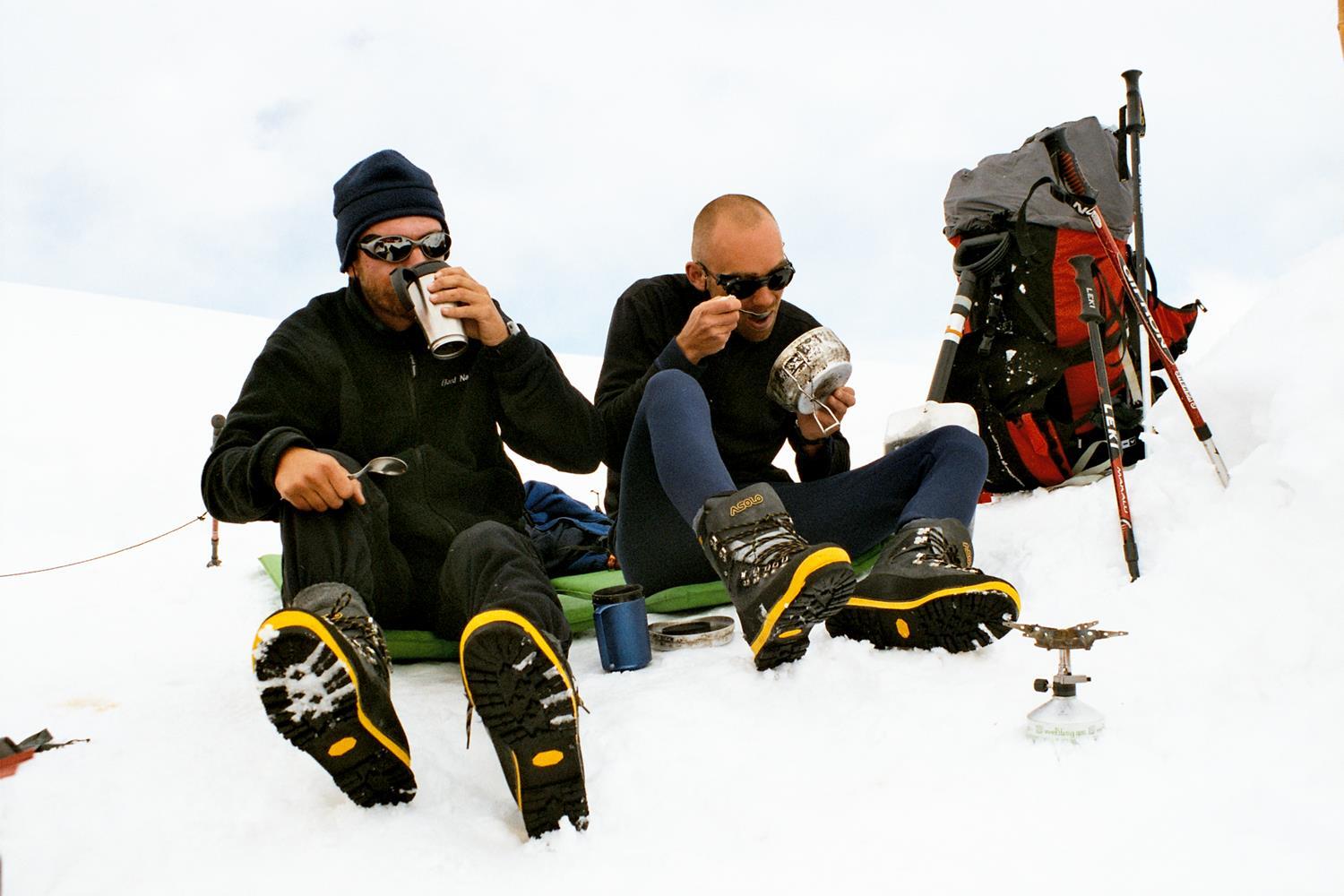
NUTRITION AND HYGIENE
A high-altitude expedition is a demanding test not only for your physical condition, but also for your taste buds and your entire digestive system.
Altitude itself, combined with changes in:
➤ food quality
➤ meal frequency
➤ types of products available
➤ flavors and cooking methods
can lead to a reduced appetite.

ENERGY REQUIREMENTS IN THE MOUNTAINS
During climbing, the body consumes large amounts of energy. For this reason it is important to eat high-calorie foods, mainly based on carbohydrates.
A carbohydrate-rich diet helps to:
➤ limit body weight loss
➤ reduce muscle loss
➤ maintain physical performance during exertion
At extreme altitudes (6000–8000 m) the situation becomes even more challenging.Because of reduced oxygen supply, the intestines do not digest food completely, which limits nutrient absorption.

ENERGY DURING CLIMBING
In the mountains you burn a significant number of calories, so it is important to regularly supply the body with easily digestible energy.
Good options include:
➤ energy bars
➤ energy gels
➤ other fast sources of carbohydrates
A useful habit is to consume an additional ~500 kcal per day, even after your normal appetite has been satisfied.

HYGIENE IN CAMP
One of the most important rules in the mountains is hand hygiene.
Hands should be washed:
➤ before every meal
➤ after every visit to the toilet or latrine
Establishing a dedicated sanitation area is nothing new. Even in Napoleon’s army, building proper camp latrines was considered a basic rule of camp organization.
The mountains are not a festival of flying toilet paper.
TRAVELERS' DIARRHEA
Traveler’s diarrhea is a common problem during the first days of an expedition, when the body is adjusting to new food and local conditions.
The risk can be reduced with preventive measures.
Nutrition specialists recommend taking probiotics containing Saccharomyces boulardii:
➤ for up to 4 weeks before the expedition
➤ and during the first two weeks of the trip
WHAT TO DO IN CASE OF DIARRHEA
If diarrhea occurs:
➤ drink plenty of fluids
➤ preferably use electrolyte solutions
Useful products often used in travel medicine and sports hydration include:
➤ Gastrolit – 1 sachet dissolved in 200 ml of warm water after each bowel movement
If symptoms persist, stronger medications may be required, such as:
➤ Loperamide
➤ Xifaxan


-------
WANT TO LEARN MORE?
If you want to better prepare your health for trekking or a high-altitude expeditions, check out the expanded guide in the ebook "High-Altitude Medicine for Trekkers and Climbers" >>
-----
Gain practical skills for handling emergencies in the mountains through our online training "High-Altitude First Aid" >> - prepared for those planning trips to high altitudes.
-----
For a detailed list of what to include in your expedition medical kit and step-by-step instructions for assembling your personal first aid set, see the ebook "High-Altitude Expedition Medical Kit Guide" >>
PLANNING A TREK OR A HIGH-ALTITUDE EXPEDITION?
If you would like to check whether your health condition allows you to safely participate in a trek or high-altitude expedition, consider booking a medical consultation >> or using a telemedical expedition package >>
This allows you to assess potential health risks in advance, prepare properly fot altitude, and increase your safety during the expedition.
The company was established in 2004. The goal of MedEverest is education in the field of mountain medicine and the dangers of high altitudes. I deal with all medical aspects of staying at high altitude. I organize medical support for trekking and high-altitude expeditions.
Specialist Medical Practice Medeverest Robert Szymczak based in Gdańsk (80-360), at ul. Bolesława Krzywoustego 19F, NIP: 5841943576, REGON: 220148318.
All rights reserved. Copying content and photos is prohibited. Information obligation before consenting to data processing.(see).
Also checkStore regulations >> Implementation: ColinMedia.eu >>