
High-Altitude Medical
HANDBOOK


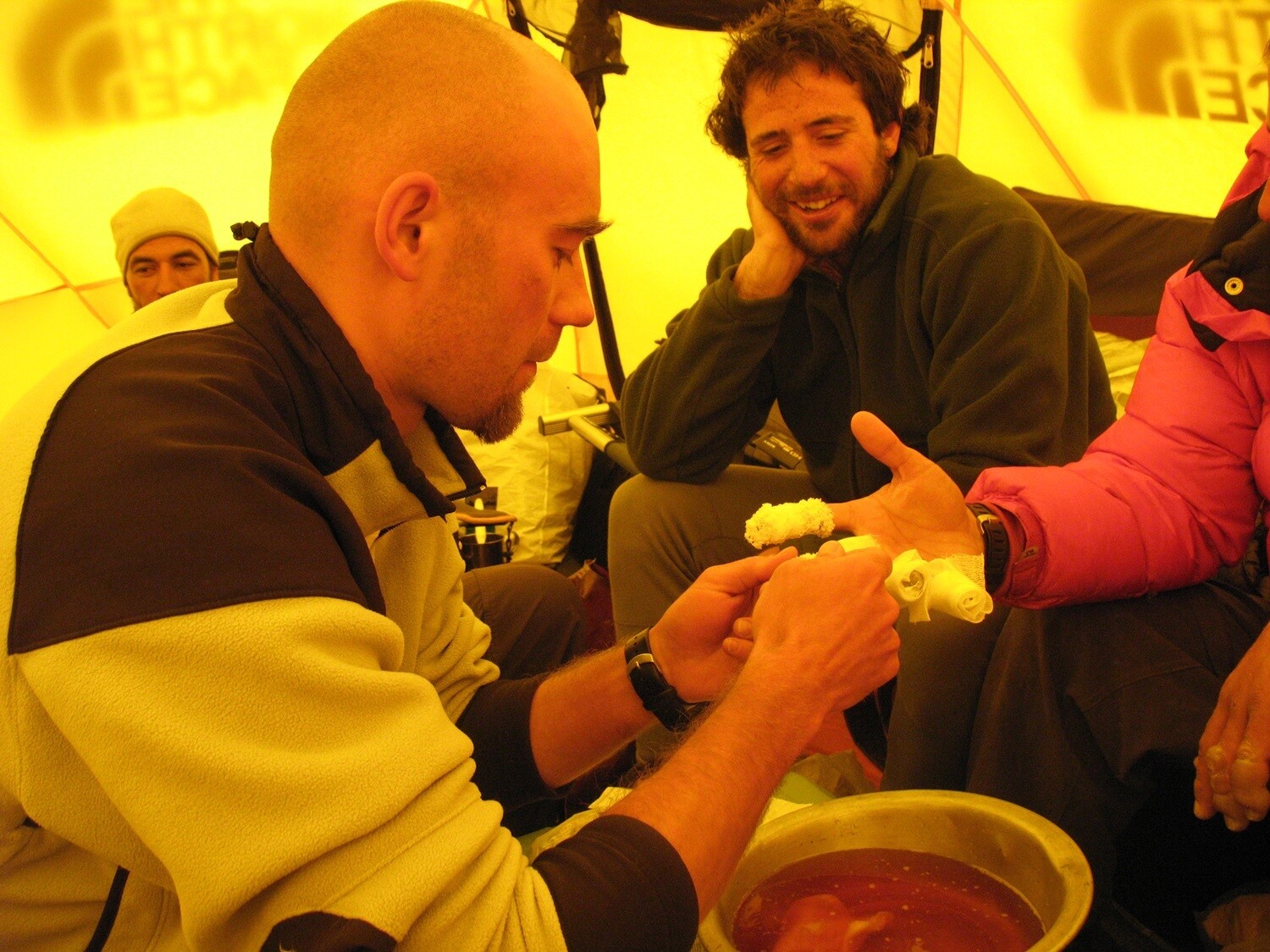
FROSTBITE
Exposed parts of the body are particularly vulnerable to low temperatures and strong wind. In high-altitude mountaineering, besides enjoying the climb and the landscape, it is essential to constantly maintain the body's thermal comfort.
The most vulnerable areas are:
➤ nose
➤ cheeks
➤ lips
➤ ears
➤ fingers
➤ toes
Low oxygen levels combined with cold temperatures increase the risk of frostbite.
As the legendary Polish mountaineer Andrzej Zawada used to say:
“An intelligent and thoughtful alpinist does not get frostbite.”
PREVENTION
Before an expedition, invest in high-quality equipment:
➤ well-fitted high-altitude boots with extra room for thick socks(usually about 1.5 sizes larger than everyday shoes)
➤ several pairs of gloves
➤ high-quality technical or merino wool socks
In this case, price usually reflects quality.
During hiking and climbing:
➤ regularly move your fingers and toes to maintain circulation and check sensation
➤ avoid tight boots
➤ do not tighten crampons excessively
➤ loosen your watch strap
➤ remove jewelry from fingers, wrists, ears, and nose
Also remember to:
➤ stay well hydrated – good blood circulation helps protect extremities
➤ keep socks and gloves dry at all times

FOOT PROTECTION SYSTEM (TESTED IN THE HIMALAYAS)
A moisture-barrier system used by polar explorers can also work extremely well in high mountains.
It proved effective during winter expeditions to Nanga Parbat and Broad Peak, as well as spring expeditions to Dhaulagiri and Mount Everest.
Layer system
➤ very thin synthetic sock (similar to a thin stocking)
➤ strong plastic bag (approx. 35 L)
➤ thick merino wool sock
➤ inner boot liner and outer shell / high-altitude boot
After reaching camp:
➤ the liner and thick wool sock remain dry
➤ the thin sock and plastic bag are damp
The skin of the foot may become slightly macerated, but it usually returns to normal quickly after drying.
➤ the thin sock can be dried next to the body
➤ the plastic bag can be dried inside the sleeping bag
By morning the whole system is dry and ready to use again.
The biggest advantage of this system is keeping boot liners and thick socks dry, which significantly reduces the risk of frostbite.

SYMPTOMS OF FROSTBITE
Suspect frostbite if the skin:
➤ turns white
➤ becomes hard
➤ loses sensation
In such a situation, immediately warm the affected area.
For example, place a finger under your armpit to warm it.
If sensation does not return within about 15 minutes, the climb should be stopped and you should return to camp.
After rewarming, the affected area may become painful and swollen.

STAGES OF FROSTBITE
If early symptoms are ignored, the injury may progress.
Typical stages include:
➤ blisters similar to burn blisters
➤ blisters filled with clear or bloody fluid
➤ tissue necrosis
In severe cases, tissue death may occur, and affected fingers or toes may require amputation.
How to reduce the risk of frostbite
➤ Invest in good boots, mittens, and a balaclava – protect the head, face, and neck.
➤ Avoid direct skin contact with metal equipment.
➤ Do not smoke and avoid alcohol or drugs.
➤ Reduce effort to limit fatigue and sweating.
➤ Protect areas that have been frostbitten before.
➤ Avoid tight boots and too many layers of socks.
➤ Drink plenty of fluids.
➤ Always wear dry clothing and gloves.
FROSTBITE TREATMENT
Pain relief
You may use:
➤ Ibuprofen – 400 mg every 6 hours
For stomach protection:
➤ Omeprazole – 1 tablet before breakfast
Handling frostbitten tissue
➤ Do not rub frostbitten tissue.
➤ Do not heat with high temperatures (e.g., a lighter flame).
➤ Do not puncture blisters, unless they prevent evacuation (e.g., on the feet).
➤ If necessary, puncture them with a sterile needle from a first-aid kit.
Rewarming
At base camp or in a shelter:
➤ immerse the frostbitten area in water at 38–40°C (100–104°F)
➤ warm for about 30 minutes
➤ monitor the water temperature continuously
Further Care
➤ apply a sterile gauze dressing
➤ use aloe or antibacterial ointment (e.g., Argosulfan)
➤ change the dressing at least once per day
If the hand is frostbitten, it should be immobilized in a sling (for example using a climbing sling).


-------
WANT TO LEARN MORE?
If you want to better prepare your health for trekking or a high-altitude expeditions, check out the expanded guide in the ebook "High-Altitude Medicine for Trekkers and Climbers" >>
-----
Gain practical skills for handling emergencies in the mountains through our online training "High-Altitude First Aid" >> - prepared for those planning trips to high altitudes.
-----
For a detailed list of what to include in your expedition medical kit and step-by-step instructions for assembling your personal first aid set, see the ebook "High-Altitude Expedition Medical Kit Guide" >>
PLANNING A TREK OR A HIGH-ALTITUDE EXPEDITION?
If you would like to check whether your health condition allows you to safely participate in a trek or high-altitude expedition, consider booking a medical consultation >> or using a telemedical expedition package >>
This allows you to assess potential health risks in advance, prepare properly fot altitude, and increase your safety during the expedition.
The company was established in 2004. The goal of MedEverest is education in the field of mountain medicine and the dangers of high altitudes. I deal with all medical aspects of staying at high altitude. I organize medical support for trekking and high-altitude expeditions.
Specialist Medical Practice Medeverest Robert Szymczak based in Gdańsk (80-360), at ul. Bolesława Krzywoustego 19F, NIP: 5841943576, REGON: 220148318.
All rights reserved. Copying content and photos is prohibited. Information obligation before consenting to data processing.(see).
Also checkStore regulations >> Implementation: ColinMedia.eu >>